Garage Roller Door Repair: Easy Fixes & Maintenance Tips
Smooth operator: How to fix garage roller doors systematically
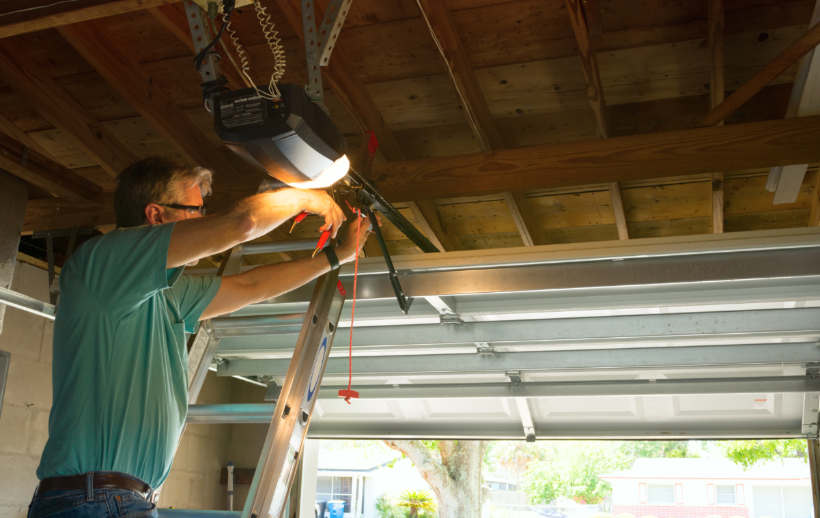
Key Facts
- Garage roller doors can develop issues like noise, misalignment, derailment, unravelling, and imbalance, leading to safety risks if left unaddressed.
- Simple DIY fixes include lubricating moving parts, tightening screws, realigning tracks, and cleaning obstructions. Broken torsion springs and electrical malfunctions require professional repairs.
- Regular maintenance, such as cleaning tracks, lubricating moving parts, tightening hardware, and testing safety features, helps extend the lifespan of a garage roller door.
No matter how durable a garage roller door is, its parts can wear out over time. Aside from mechanical issues such as broken springs and damaged rollers, electrical problems can arise from an old garage roller door. Not only will your home become vulnerable to break-ins, but your safety will also be at risk, as the door may suddenly fall.
Fortunately, you can do some quick fixes before the damages get worse. In this guide, we’ll walk through the different methods of fixing a garage roller door—from simple fixes like getting rid of annoyingly squeaky sounds to adjusting the springs to bring back the garage door balance.
What are some common garage roller door issues and their causes?
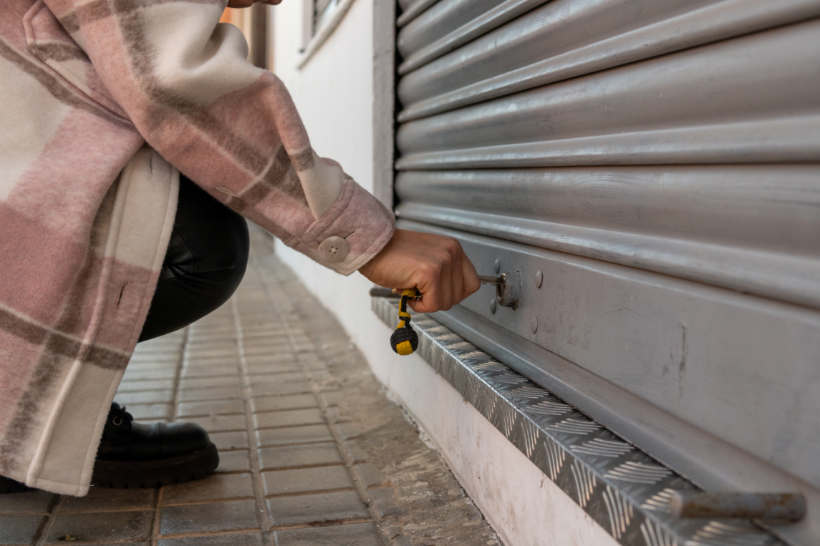
Examining a roller garage door to check for locking issues. | Source: iStock
Since garage roller doors are made of different parts, various issues can occur over time. Learning about these potential issues is vital, as it’s the first step in fixing a roller garage door.
Noise
Imagine waking up in the morning to enjoy your breakfast, only for someone to open the garage door, and suddenly you hear the door rattling and vibrating. Very annoying, isn’t it? It can happen once the door’s screws loosen over time.
But if the garage door starts screeching, that’s a different story. The rollers or small wheels inside the tracks that help the door glide up and down are likely beginning to rust. Rust causes the rollers to grind against the tracks, producing a screeching sound.
Meanwhile, if there are banging and scraping noises, the door tracks could be bent out of shape. Watch out also for popping and rumbling noises, as these indicate that the torsion springs (the steel wires for the smooth operation of raising and lowering a garage door) are about to break.
Misalignment
If your roller garage door often gets stuck and fails to close all the way to your floor, it is misaligned. This can happen if the door isn’t positioned correctly on its tracks, which serve as lanes that guide the door to a proper alignment. If left unfixed, a misaligned door can cause extra wear on other parts and lead to other issues. Worse, this could expose the garage to pests, rain, and cold air.
Derailment
Derailment is worse than a misaligned garage door because it means that the rollers have come off the metal tracks. This leaves the door tilted to one side and stuck completely. Trying to move a derailed garage door can be dangerous, as it can cause the door to slam down suddenly.
So, what causes derailment? The door’s metal tracks could have bent or become misaligned due to a car hitting the door. Small objects such as dirt, leaves, and stones can cause blockage, causing the rollers to jump off the rack. Cracked or loose rollers can be another cause of derailment.
Unravelling
An unravelling garage door means the metal slats are separating or the cables are coming loose. Garage roller doors are made up of horizontal metal slats that roll up into a big, round tube called a ‘drum’ at the top. These have end locks to secure them and keep them aligned while rolling up. So, if the end locks move out of place, the slats can twist or unravel.
Another cause of unravelling is when the steel cables that lift the garage door slip off from the drum. This can happen once the steel cables become loose due to wear and tear. Moreover, if a garage door has an automatic mechanism and malfunctions, the motor and springs can pull the garage door too hard, causing the metal slats and steel cables to unravel.
Imbalance
An unbalanced roller garage door is the most serious issue because it puts extreme pressure on the door’s lifting mechanism. It happens when the torsion springs and steel cables, which are responsible for holding the door’s weight, are broken. If they suddenly break, then the door can crash down suddenly, potentially causing severe injuries.
One sign of an imbalanced garage roller door is when one side of the door starts moving faster or slower than the other. This causes the door to look uneven while opening or closing.
What do you need to do or get before fixing garage roller doors?

Essential maintenance tools including ratchets and pliers. | Source: iStock
You and your family’s safety should be your number one priority when fixing roller doors. Remember that there are many types of garage doors, so before you begin, read the manufacturer’s manual about proper operation and maintenance procedures. It will likely have some safety tips about your door’s specific model.
Next, inspect your door for damages (particularly in cables and springs), clear the door from obstructions, and wear protective gloves and safety glasses to protect yourself from sharp metal edges. Most importantly, keep the remote controls and switches out of children’s reach to prevent them from accidentally opening and closing the garage door.
Don’t forget also to prepare these tools:
- Flathead screwdrivers for tightening screws and removing components
- Adjustable wrench for adjusting bolts and nuts
- Needle-nose pliers and locking pliers to hold components in place
- Winding bars to adjust the tension in torsion springs
- A hammer or rubber mallet to adjust and align door parts
- A power drill for installing and removing screws
- A headlamp or portable lamp to illuminate the garage area
- Lubrication oil to maintain door’s moving parts in top condition
However, these are just some essential tools to fix a roller door. We’ll introduce and recommend more tools as we dive further into how to repair a garage roller door.
How can you fix an off-track garage door roller?

Garage roller door showing signs of a possible off-track condition. | Source: iStock
An off-track garage door roller happens when one of the wheels that guide the door dislodges from the metal tracks, causing derailment. Once this issue occurs, you’ll find it difficult to open and close the door. Luckily, you may do some DIY fixes for an off-track roller garage door.
But before starting, stop using the garage door when it’s off-track to prevent further damage. Also, disconnect the power to prevent accidental movement if it’s a motorised garage door.
After these safety precautions, follow this step-by-step guide:
Step 1: Disconnect the garage door opener
Pull down the emergency release cord or the red rope hanging from the centre metal track. This will release the trolley connecting the door to the opener, allowing you to manually lift and lower the garage door without the motor engaging.
Step 2: Inspect the track for damages
Check both sides of the garage door and see where the roller has come off the track. Next, inspect the metal tracks and look for loose bolts and misaligned sections.
Step 3: Secure the garage door
Lift the garage door until it reaches the top rollers that went off-track. Then, place the locking pliers at the bottom rollers on both sides to hold the door in place. You can also position a ladder underneath the door for extra support.
Step 4: Reinsert the roller
Using pliers, gently open the track by pulling it outward near where the roller is off-track. Remember not to open or bend the track too much to avoid misalignment! Once the gap is wide enough, guide the roller back into the track. Do this for all off-track rollers.
Step 5: Realign the track
Grab a rubber mallet to return the metal track to its original shape. Again, don’t use too much force—just enough for the track to look straight and even against the door. You’ll also have to tighten loose bolts with a wrench or socket set.
Step 6: Clean the tracks
Remove built-up dirt and dust inside the track with a clean cloth and degreaser, and use a silicone-based lubricant for the rollers and metal tracks.
Step 7: Test the garage door
Remove the locking pliers from the bottom pliers and lift and lower the door several times. If it’s working smoothly, you can proceed to reconnecting the garage door opener. Pull your emergency release cord back into position and grab the remote to test if the door makes unusual noises upon opening and closing.
| Some important reminders: ❗Do NOT attempt to repair if the garage door is too heavy. You need to call a professional because this often means the springs are broken, and working with such issues is dangerous, as the door might collapse suddenly. ❗Avoid repairing the door if it still makes noise or gets stuck after being fixed. There could be a deeper issue with the springs, cables, or motor that requires a professional to fix. |
How can you repair an unravelling garage roller door?
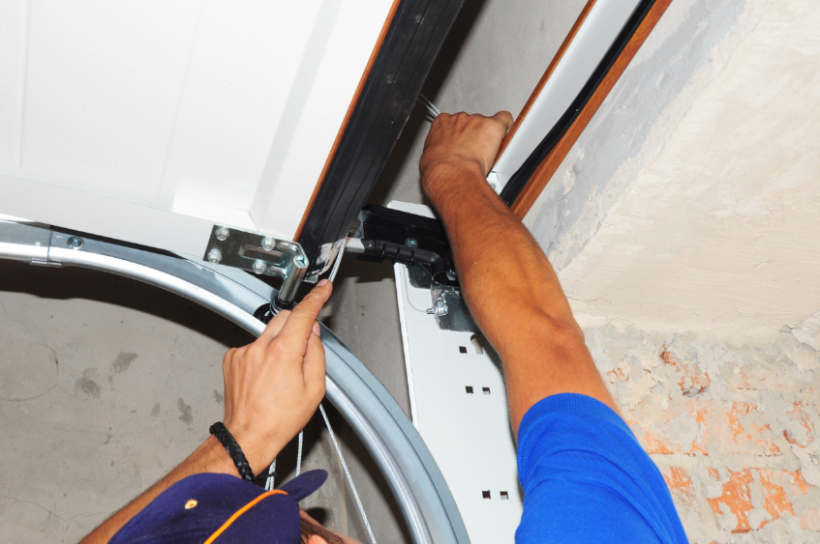
Technician works to fix an unravelling roller door mechanism | Source: iStock
An unravelling garage roller door happens when the tension is too low, so the metal curtain or the main door panel loosens around the drum. This causes ‘ballooning’ in which the garage roller door bulges outward and unravels unevenly.
Leaving a garage roller door unravelled can lead to further issues. It can cause the metal tracks to bend and add stress to the motor, further damaging the main door panel. One way to fix this is to rewind and secure the garage door roller. Here’s how:
Step 1: Lower and close the door
An unravelled garage door could slam down suddenly, so try fully lowering the door to the ground to prevent it from further unravelling. However, if it’s stuck mid-way, manually guide it slowly using the release cord on motorised doors.
Step 2: Rewind the curtain onto the drum
The metal curtain should be wrapped tight and even around the drum at the topmost part of the garage roller door.
Don’t be worried if the curtain has almost come off its drum. You can ‘rewind’ or roll it back onto the drum, but ensure to apply smoothly with controlled movements. Also, keep the slats in check and make sure they’re aligned while rewinding the curtain to prevent the door from jamming.
Step 3: Check and adjust torsion springs
Garage roller doors have torsion springs that help the main door panel to roll properly. Typically, these springs are located at the top of the door inside the drum. You can use an Allen wrench to adjust the tension of the torsion springs.
Usually, you have to increase the tension of the torsion springs because an unravelling door means the main door panel is too loose. You have to adjust it counterclockwise to tighten the springs and increase tension.
Step 4. Secure the door
After rewinding, test the door by slowly rolling it up and down. If it still unravels or feels loose, you may have to adjust the torsion springs again.
| Some important reminders: ❗If the door snaps too fast, do NOT attempt a DIY fix. You need a professional to adjust the torsion springs, as the wrong adjustment could lead to serious injuries and further damage. ❗If it’s an automatic garage door roller with a motorised mechanism, leave the repairs to a professional. This could be an electrical issue, which can be dangerous to work with. |
How can you tension a garage roller door correctly?
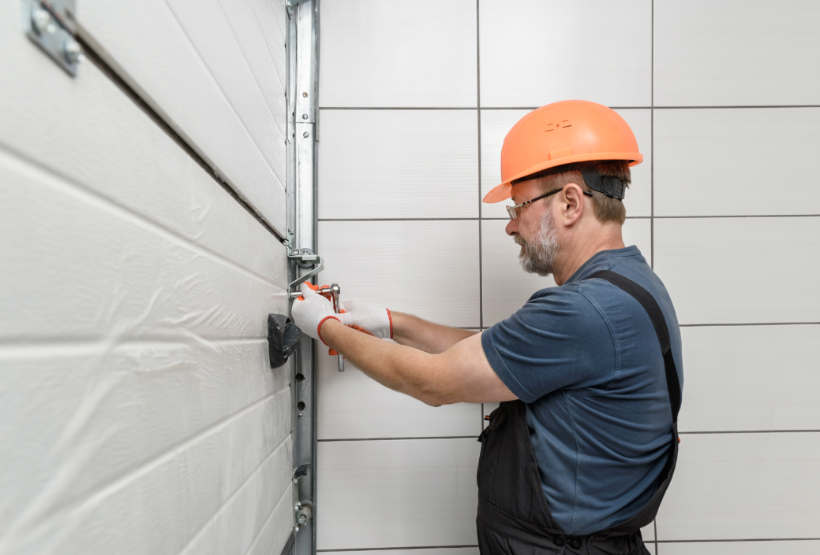
Proper spring tension is essential for balanced garage door movement | Source: iStock
A garage roller door with incorrect tension means some balance issues must be fixed. So, how do you know if the tension is off? Lift the door manually halfway. If it’s a motorised garage door roller, disconnect the opener by pulling the manual release cord first. After that, let go. If the door moves up, the tension is too high, so it only stays open. However, if it moves down, the tension is too low, causing the door to feel too heavy.
If these issues exist, you may adjust the springs by following these steps to properly tension a roller door:
| ❗WARNING: Adjusting the tension can be dangerous because this involves working with high-tension springs. The door can recoil suddenly with improper adjustments, so be extra careful. Calling a professional is best, especially if you’re unfamiliar with garage door repairs. |
Step 1: Prepare and secure the door
Close the door and disconnect the automatic opener if it’s a motorised garage roller door. Grab some tie-down straps or ratchet straps to secure the door in place. This helps prevent the door from moving while working.
Step 2: Locate and adjust the tension
Usually, the tensioning parts are at the top, including the U-bolts or the U-shaped metal clamps. These bolts help secure the tension bar and control how a door moves using a spring.
If the tension is too high, you could loosen the U-bolts with an impact driver. However, to prevent the door from dropping suddenly, do not loosen the bolts too much, and do it one at a time.
Next, adjust the tension shaft, which is the long, cylindrical metal rod running horizontally across the roller door’s top inside the drum mechanism. Turn the shaft a quarter or half turn in a steady downward pressure. Turn clockwise if you need to increase tension. Otherwise, turn counterclockwise to decrease tension.
If you’re happy with the adjustments, tighten the U-bolts back using an impact driver.
Step 3: Check the balance
Try manually lifting the door halfway, and then let go. The door should stay in place, but if it moves, repeat step two.
Step 4: Lubricate the door
Apply silicone-based lubricant to springs, hinges, and tracks to ensure a smoother operation.
How can you fix a squeaky garage roller door?
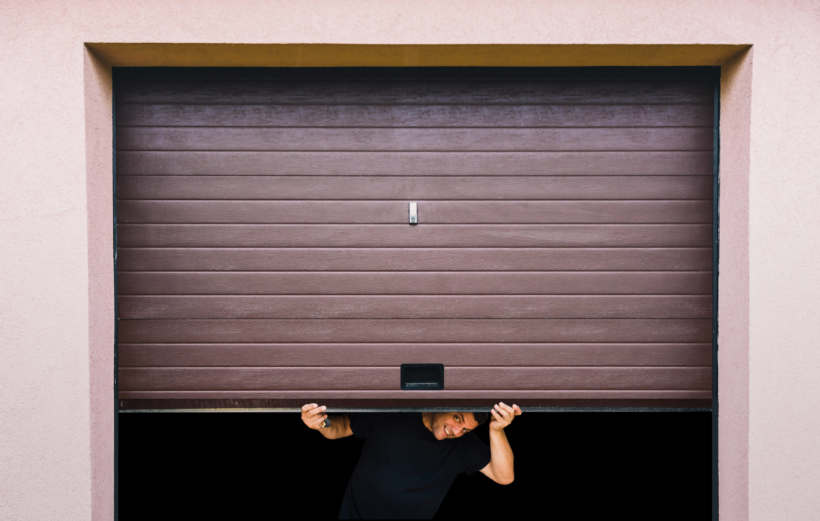
Common issue: roller doors producing squeaking sounds when in use | Source: iStock
Although garage door noises aren’t too serious compared to other issues, leaving them unfixed can become bigger problems in the future. Here are some quick remedies to help eliminate the noise:
Lubricate moving parts
Use a silicone-based or lithium grease lubricant to lubricate moving parts such as hinges, rollers, pivot points, ball bearings, and torsion springs. However, avoid lubricating the metal tracks to prevent dirt from building up easily.
Don’t use WD-40, as it’s a degreaser (not a lubricant) that can attract dirt over time. Standard motor oil shouldn’t be used either, as it can cause dust buildup and clogging.
Tighten loose nuts, bolts, and screws
Fastening tools such as nuts, bolts, and screws are used to connect various garage door parts. If you frequently use the garage door, these tools can loosen over time, causing the garage door to vibrate and make noises. You can tighten the loose fasteners with a wrench, but don’t overtighten, as too much force can damage the door’s internal parts.
Clean the tracks
You can prevent an off-track garage door by always keeping the tracks clean. This tip is simple: You only have to remove dirt and debris using a clean, damp cloth or small brush. Some quick fixes, such as straightening a bent track with pliers, can also help.
Replace worn-out parts
If your door has worn-out metal rollers, invest and replace them with nylon rollers. They’re quieter and require less maintenance than metal and plastic rollers. If your door slams when closing, consider replacing the bottom rubber strip. Slamming noises often indicate that the rubber strips are worn out, so a replacement is much needed.
Hiring a handyman is best for these small jobs as they can help you properly who could help install the parts.
How can you keep garage roller doors in good condition?

A well-kept roller garage door in smooth working condition | Source: iStock
Fixing the issues is only the first step in having a smoothly moving garage door. You’ll also have to match it with regular maintenance and upkeep to ensure longevity. Follow this garage roller door maintenance checklist for a safe and durable garage roller door:
Clean the door and tracks
Dirt and dust can build up over time on the metal tracks and main door panel, so it’s best to clean them thoroughly every two months. Use mild detergent and a soft cloth to wipe the door’s surface. You can also use a vacuum to get rid of the remaining dust and dirt.
Lubricate moving parts
We keep repeating the importance of proper lubrication since this is key to a smoothly moving garage roller door. Applying a silicone-based lubricant every three to six months is the best practice to reduce the wear and tear on the door’s metal parts.
Check and tighten hardware
Always check for any loose screws, bolts, and brackets, as this can cause the door to shake or fall off the tracks. Use a wrench to tighten the loose components.
Test safety features
If you have an automatic roller door, try testing the safety feature every once in a while. How? Place an object (like a roll of paper towels) under the door and try closing it. If the door doesn’t reverse, the auto-reverse safety feature may be faulty. Call a professional immediately to fix the safety sensors.
Efficiently restore your garage roller door with Oneflare
A broken garage roller door can be a real hassle, but with the right approach, you can fix minor issues before they turn into costly repairs. Whether it’s a noisy roller, a misaligned track, or a door that won’t close properly, knowing how to troubleshoot these problems can save you time and stress.
However, when the damage is too complex or safety becomes a concern, calling in a professional is the best solution. With Oneflare, finding a garage door expert is quick and hassle-free. From minor fixes to complete replacements, they help restore your garage door so that it operates smoothly while improving your home’s curb appeal.
FAQs on garage roller door repair
Can I use aftermarket parts for my garage roller door repairs?
Yes, you can buy aftermarket parts, but make sure they meet quality standards to maintain the safety and functionality of your garage door.
Can rusted rollers or tracks be repaired, or should they be replaced?
It depends on the extent of damage. If the rust marks are minor, you may clean and lubricate the rollers and tracks to restore your door’s functionality. However, if the rust is severe, almost damaging the tracks and rollers, it’s best to replace them entirely.
Can a bent garage door panel be fixed?
Yes, you can fix a bent garage door panel, but it depends on the extent of the damage. You can straighten the door panel with a wooden mallet or hammer if there are only minor dents. However, for more significant damage, you’ll need to have it replaced by a professional.
How long does it take for a professional to repair a garage roller door?
The total time to repair a garage roller door depends on the nature of the problem. However, simple repairs usually only take an hour to finish. Meanwhile, more complex issues that require a replacement will take hours and sometimes weeks to finish.